Kachnar

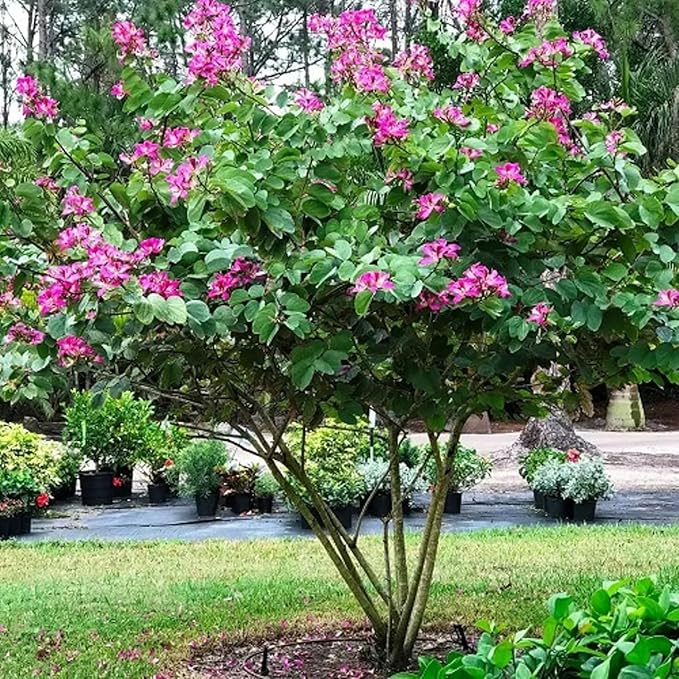
The Kachnar (scientifically known as Bauhinia variegata) is one of the most celebrated flowering trees in Pakistan. Known as the Orchid Tree, it is famous for its distinct, two-lobed leaves that resemble a butterfly or a camel’s footprint, and its stunning, orchid-like blooms that signal the arrival of spring.

Quick Facts

  • Scientific Name: Bauhinia variegata

  • Plant Type: Deciduous Ornamental Tree

  • Hardiness: Extremely well-adapted to the local climate; very drought-tolerant once established.

  • Colors: Most commonly seen in soft pink, vibrant purple, and pure white (Bauhinia alba).

Key Benefits

  • Spectacular Spring Display: In February and March, the tree becomes almost entirely covered in fragrant, delicate flowers. It is a showstopper for any garden or streetscape.

  • Culinary & Cultural Value: In Pakistan, the unopened flower buds are a seasonal delicacy, often cooked with meat or mince (Kachnar Qeema). Having one in your garden provides a fresh, organic source for this traditional dish.

  • Unique Foliage: The “butterfly” leaves provide a soft, interesting texture even when the tree is not in bloom. It creates a medium-density shade that is perfect for sitting under during mild afternoons.

  • Ideal Urban Tree: Because it does not grow to an unmanageable size (usually reaching 20–30 feet), it is perfect for residential plots, parking areas, and roadside planting.

  • Medicinal Heritage: Various parts of the tree, including the bark and roots, are used in traditional medicine for their anti-inflammatory properties.

Care Tips for the Lahore Climate

  • Sunlight: Thrives in full sun. It needs maximum light to produce a heavy flush of flowers in the spring.

  • Watering: Young trees need regular watering to establish. Once the tree is mature, it is remarkably drought-resistant and can survive on minimal supplemental water during the dry months.

  • Soil: It is very adaptable and grows well in the local loamy or sandy soils. However, ensure the planting site has good drainage, especially during the monsoon rains.

  • Pruning: It is best to prune the tree in early summer, right after the flowering season has ended. This helps maintain a clean “canopy” shape and encourages new growth for the following year.

Landscape Styling Ideas

  • The “Kitchen Garden” Anchor: Plant it near your vegetable patch. It serves as both a beautiful ornamental and a functional “food forest” tree.

  • Driveway Borders: A row of Kachnar trees along a boundary wall or driveway creates a magnificent “orchid tunnel” effect every spring.

  • The White & Purple Contrast: Planting the white (alba) and purple varieties near each other creates a sophisticated color palette that is much more subtle than the fiery colors of the Gulmohar.
Category:

The Kachnar (scientifically known as Bauhinia variegata) is one of the most celebrated flowering trees in Pakistan. Known as the Orchid Tree, it is famous for its distinct, two-lobed leaves that resemble a butterfly or a camel’s footprint, and its stunning, orchid-like blooms that signal the arrival of spring.

Quick Facts

  • Scientific Name: Bauhinia variegata

  • Plant Type: Deciduous Ornamental Tree

  • Hardiness: Extremely well-adapted to the local climate; very drought-tolerant once established.

  • Colors: Most commonly seen in soft pink, vibrant purple, and pure white (Bauhinia alba).

Key Benefits

  • Spectacular Spring Display: In February and March, the tree becomes almost entirely covered in fragrant, delicate flowers. It is a showstopper for any garden or streetscape.

  • Culinary & Cultural Value: In Pakistan, the unopened flower buds are a seasonal delicacy, often cooked with meat or mince (Kachnar Qeema). Having one in your garden provides a fresh, organic source for this traditional dish.

  • Unique Foliage: The “butterfly” leaves provide a soft, interesting texture even when the tree is not in bloom. It creates a medium-density shade that is perfect for sitting under during mild afternoons.

  • Ideal Urban Tree: Because it does not grow to an unmanageable size (usually reaching 20–30 feet), it is perfect for residential plots, parking areas, and roadside planting.

  • Medicinal Heritage: Various parts of the tree, including the bark and roots, are used in traditional medicine for their anti-inflammatory properties.

Care Tips for the Lahore Climate

  • Sunlight: Thrives in full sun. It needs maximum light to produce a heavy flush of flowers in the spring.

  • Watering: Young trees need regular watering to establish. Once the tree is mature, it is remarkably drought-resistant and can survive on minimal supplemental water during the dry months.

  • Soil: It is very adaptable and grows well in the local loamy or sandy soils. However, ensure the planting site has good drainage, especially during the monsoon rains.

  • Pruning: It is best to prune the tree in early summer, right after the flowering season has ended. This helps maintain a clean “canopy” shape and encourages new growth for the following year.

Landscape Styling Ideas

  • The “Kitchen Garden” Anchor: Plant it near your vegetable patch. It serves as both a beautiful ornamental and a functional “food forest” tree.

  • Driveway Borders: A row of Kachnar trees along a boundary wall or driveway creates a magnificent “orchid tunnel” effect every spring.

  • The White & Purple Contrast: Planting the white (alba) and purple varieties near each other creates a sophisticated color palette that is much more subtle than the fiery colors of the Gulmohar.

Reviews

There are no reviews yet.

Be the first to review “Kachnar”

Your email address will not be published. Required fields are marked *

Scroll to Top