

-
Botanical Identity: Scientifically known as Acalypha, this genus belongs to the Euphorbiaceae family and includes over 400 species of flowering shrubs and herbs. Two of the most popular varieties for architectural interest are the Chenille Plant (Acalypha hispida) and the Copperleaf (Acalypha wilkesiana).
-
Striking Visual Textures:
-
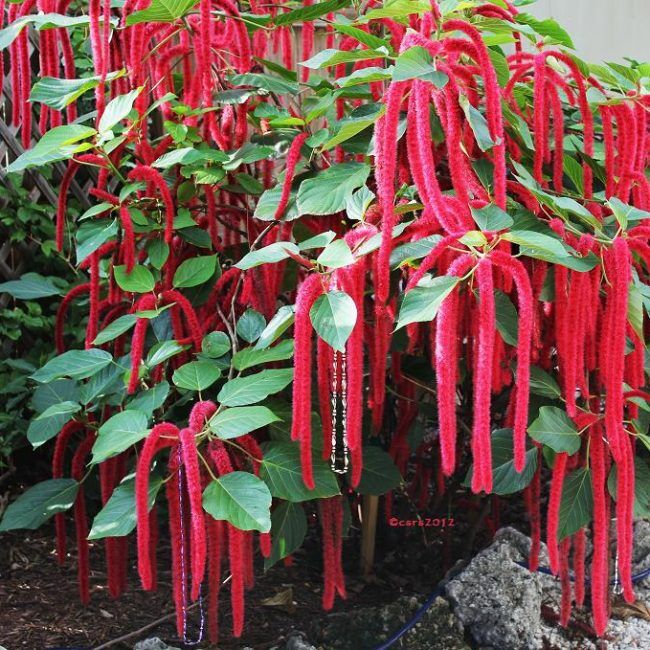
Chenille Plant: Famous for its long, pendant, bright red flowers that resemble fuzzy “caterpillars” or tassels. These can reach lengths of over 45cm, providing a soft, vertical contrast to the rigid lines of cacti.
-
Copperleaf: Prized for its large, heart-shaped leaves that come in iridescent shades of copper, bronze, crimson, and pink. The “multicolored” or “marginata” varieties feature serrated edges with contrasting borders, offering a high-impact color palette similar to the Zanzibar Croton.
-
-
Architectural Massing: As a fast-growing shrub, it can quickly create a dense “living wall” or privacy screen. This makes it a functional tool for defining boundaries in larger landscape projects or providing a lush, tropical backdrop for smaller succulents.
-
Sun and Heat Performance: Most species thrive in the intense heat and bright light characteristic of the local climate. While they prefer some protection from the harshest midday sun to avoid leaf scorch, they require significant light to maintain their vibrant leaf pigmentation.
-
Humidity and Moisture: Unlike the Snake Plant or ZZ Plant, Acalypha prefers consistently moist soil and higher humidity. In the dry summer months of Lahore, it benefits from regular misting or being grouped with other tropicals like the Monstera to create a microclimate.
-
Functional Air Purification: These plants are effective at filtering common indoor pollutants, contributing to a cleaner and more refreshed atmosphere in professional or residential environments.
Acalpha
-
Botanical Identity: Scientifically known as Acalypha, this genus belongs to the Euphorbiaceae family and includes over 400 species of flowering shrubs and herbs. Two of the most popular varieties for architectural interest are the Chenille Plant (Acalypha hispida) and the Copperleaf (Acalypha wilkesiana).
-
Striking Visual Textures:
-
Chenille Plant: Famous for its long, pendant, bright red flowers that resemble fuzzy “caterpillars” or tassels. These can reach lengths of over 45cm, providing a soft, vertical contrast to the rigid lines of cacti.
-
Copperleaf: Prized for its large, heart-shaped leaves that come in iridescent shades of copper, bronze, crimson, and pink. The “multicolored” or “marginata” varieties feature serrated edges with contrasting borders, offering a high-impact color palette similar to the Zanzibar Croton.
-
-
Architectural Massing: As a fast-growing shrub, it can quickly create a dense “living wall” or privacy screen. This makes it a functional tool for defining boundaries in larger landscape projects or providing a lush, tropical backdrop for smaller succulents.
-
Sun and Heat Performance: Most species thrive in the intense heat and bright light characteristic of the local climate. While they prefer some protection from the harshest midday sun to avoid leaf scorch, they require significant light to maintain their vibrant leaf pigmentation.
-
Humidity and Moisture: Unlike the Snake Plant or ZZ Plant, Acalypha prefers consistently moist soil and higher humidity. In the dry summer months of Lahore, it benefits from regular misting or being grouped with other tropicals like the Monstera to create a microclimate.
-
Functional Air Purification: These plants are effective at filtering common indoor pollutants, contributing to a cleaner and more refreshed atmosphere in professional or residential environments.

Reviews
There are no reviews yet.