

-
Botanical Identity: While commonly referred to as a “palm” due to its tropical appearance, the Banana plant belongs to the genus Musa and is technically a giant herbaceous perennial—the world’s largest herb.
-
Architectural Foliage: It is prized for its massive, paddle-shaped leaves that can reach lengths of 2 to 3 meters. These broad leaves provide a bold, “jungle-like” architectural scale that contrasts sharply with the fine, needle-like texture of the Zanzibar Croton.
-
Structural Pseudo-stem: The “trunk” is not made of wood but is actually a pseudostem—a structural column of tightly packed leaf bases. This provides a thick, vertical element that can serve as a natural anchor point in a garden or courtyard.
-
Dramatic Textural Evolution: In windy conditions, the large leaves naturally tear along the veins, creating a fringed, “feather-like” look. This weathered texture adds a dynamic, organic quality to a landscape, similar to the arching fronds of the Alexandra Palm.
-
Fast-Growing Verticality: The Banana plant is one of the fastest-growing architectural specimens, capable of reaching its full height in a single growing season. This makes it a functional choice for quickly establishing shade or a privacy screen in the Lahore climate.
-
Culinary and Functional Utility: Many varieties produce edible fruit, while the large leaves are often used in traditional cooking as natural “plates” or wrappers.
-
Climate Performance: It thrives in the intense heat and humidity of the local region but requires protection from frost and strong, drying winds. Because it is a heavy feeder, it needs rich, well-draining soil and a consistent supply of water to maintain its lush, turgid appearance.
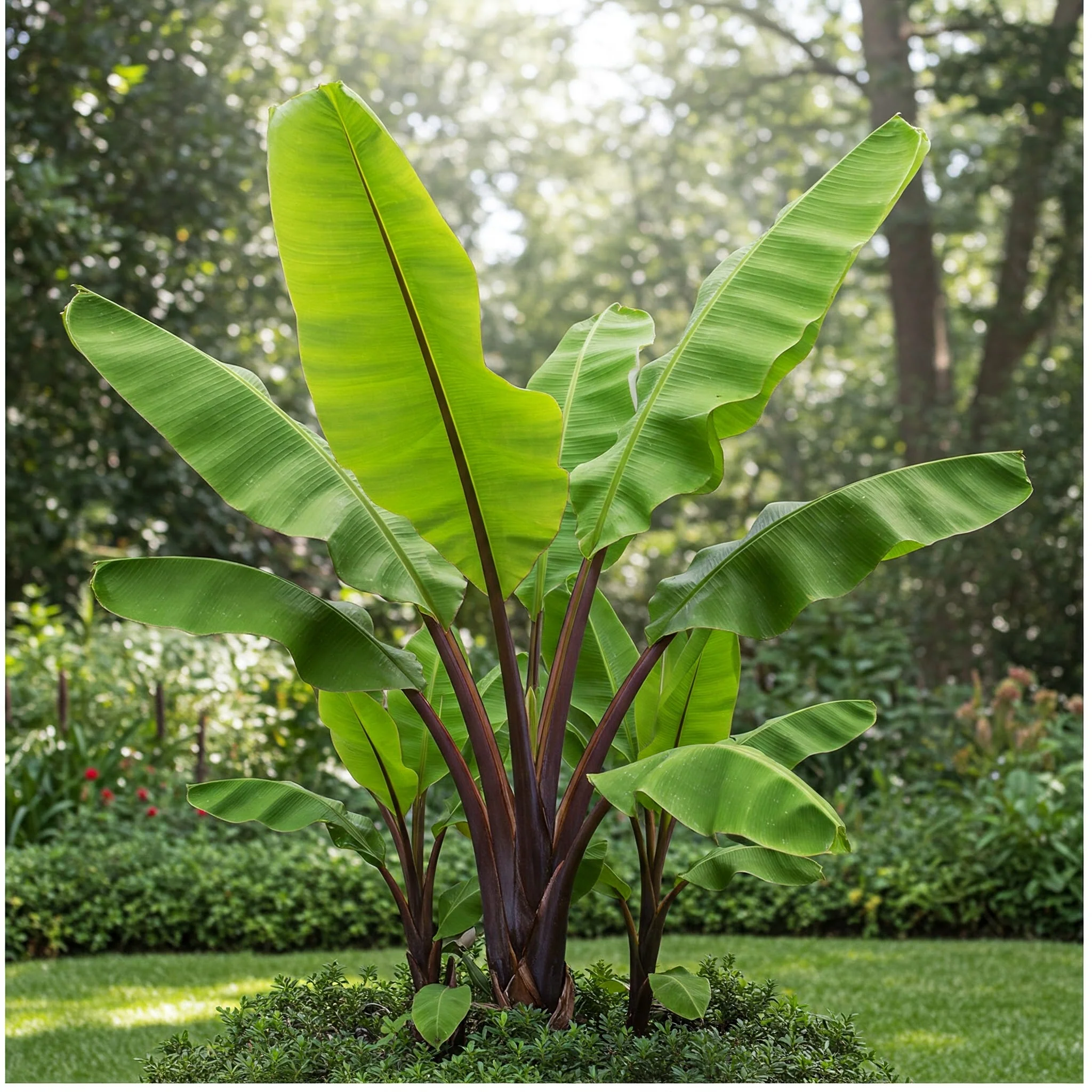
Banana Palm
-
Botanical Identity: While commonly referred to as a “palm” due to its tropical appearance, the Banana plant belongs to the genus Musa and is technically a giant herbaceous perennial—the world’s largest herb.
-
Architectural Foliage: It is prized for its massive, paddle-shaped leaves that can reach lengths of 2 to 3 meters. These broad leaves provide a bold, “jungle-like” architectural scale that contrasts sharply with the fine, needle-like texture of the Zanzibar Croton.
-
Structural Pseudo-stem: The “trunk” is not made of wood but is actually a pseudostem—a structural column of tightly packed leaf bases. This provides a thick, vertical element that can serve as a natural anchor point in a garden or courtyard.
-
Dramatic Textural Evolution: In windy conditions, the large leaves naturally tear along the veins, creating a fringed, “feather-like” look. This weathered texture adds a dynamic, organic quality to a landscape, similar to the arching fronds of the Alexandra Palm.
-
Fast-Growing Verticality: The Banana plant is one of the fastest-growing architectural specimens, capable of reaching its full height in a single growing season. This makes it a functional choice for quickly establishing shade or a privacy screen in the Lahore climate.
-
Culinary and Functional Utility: Many varieties produce edible fruit, while the large leaves are often used in traditional cooking as natural “plates” or wrappers.
-
Climate Performance: It thrives in the intense heat and humidity of the local region but requires protection from frost and strong, drying winds. Because it is a heavy feeder, it needs rich, well-draining soil and a consistent supply of water to maintain its lush, turgid appearance.



Reviews
There are no reviews yet.