

-
Botanical Identity: A grafted cactus is a “living composite” created by physically joining two different species—a colorful top part (the scion) and a sturdy, green base (the rootstock). The most iconic version is the Moon Cactus (Gymnocalycium mihanovichii), often seen in vibrant neon reds, yellows, and pinks.
-
Engineering a Symbiosis: The colorful scion often lacks chlorophyll, meaning it cannot survive on its own through photosynthesis. It relies entirely on the green rootstock (typically Hylocereus or Dragon Fruit cactus) to provide nutrients and structural support. This makes it a fascinating example of botanical engineering and architectural teamwork.
-
High-Contrast Color Splash: Because the scion comes in intense, saturated hues that do not fade, grafted cacti provide a permanent pop of color. This serves as a brilliant foreground element when placed against the darker, metallic foliage of an Acalypha or the silvery fronds of a Bismarck Palm.
-
Sculptural Geometry: Grafted cacti offer a unique “layered” architectural look. You have the clean, vertical ribs of the green base topped with the geometric, globular, or even “crested” form of the scion. This dual-textured appearance fits perfectly into modern, minimalist interior designs.
-
Compact Professional Utility: These specimens typically remain small and slow-growing. Their compact nature makes them ideal “desk-side” companions for professional environments or as detailed accents in a larger succulent arrangement featuring Adenium or Snake Plants.
-
Care and Longevity: While the rootstock is very hardy and heat-tolerant, the graft union itself can be sensitive. They prefer bright, indirect light rather than the blistering direct sun required by a Silver Torch, as the scion can easily scorch. Over-watering is the primary risk, so well-draining soil is a functional necessity.
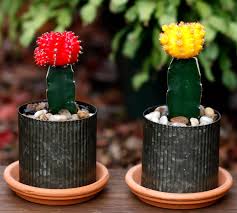
Cactus Grafted
-
Botanical Identity: A grafted cactus is a “living composite” created by physically joining two different species—a colorful top part (the scion) and a sturdy, green base (the rootstock). The most iconic version is the Moon Cactus (Gymnocalycium mihanovichii), often seen in vibrant neon reds, yellows, and pinks.
-
Engineering a Symbiosis: The colorful scion often lacks chlorophyll, meaning it cannot survive on its own through photosynthesis. It relies entirely on the green rootstock (typically Hylocereus or Dragon Fruit cactus) to provide nutrients and structural support. This makes it a fascinating example of botanical engineering and architectural teamwork.
-
High-Contrast Color Splash: Because the scion comes in intense, saturated hues that do not fade, grafted cacti provide a permanent pop of color. This serves as a brilliant foreground element when placed against the darker, metallic foliage of an Acalypha or the silvery fronds of a Bismarck Palm.
-
Sculptural Geometry: Grafted cacti offer a unique “layered” architectural look. You have the clean, vertical ribs of the green base topped with the geometric, globular, or even “crested” form of the scion. This dual-textured appearance fits perfectly into modern, minimalist interior designs.
-
Compact Professional Utility: These specimens typically remain small and slow-growing. Their compact nature makes them ideal “desk-side” companions for professional environments or as detailed accents in a larger succulent arrangement featuring Adenium or Snake Plants.
-
Care and Longevity: While the rootstock is very hardy and heat-tolerant, the graft union itself can be sensitive. They prefer bright, indirect light rather than the blistering direct sun required by a Silver Torch, as the scion can easily scorch. Over-watering is the primary risk, so well-draining soil is a functional necessity.


Reviews
There are no reviews yet.