Jacaranda Tree

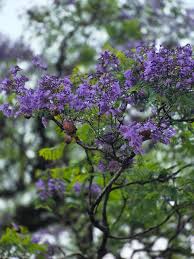
The Jacaranda (Jacaranda mimosifolia), often called the “Blue Gulmohar” in local nurseries, is one of the most ethereal and artistic trees found in Pakistan. It is famous for its breathtaking canopy of lavender-blue, trumpet-shaped flowers that appear in early spring (March and April), making it a focal point of urban landscapes in cities like Lahore and Islamabad.

Description

  • The Flowers: The tree produces spectacular clusters of vibrant purple or lavender blooms. When the flowers fall, they create a beautiful “purple carpet” on the grass or driveway below.

  • The Foliage: Even when not in bloom, the Jacaranda is a stunning tree due to its feathery, fern-like leaves. This delicate foliage gives the tree a soft, airy appearance that contrasts beautifully with more solid-leafed trees like the Mango or Arjun.

  • The Silhouette: It typically grows into a medium-to-large tree (25 to 45 feet tall) with a graceful, somewhat irregular spreading canopy that provides light, dappled shade.

Key Benefits

  • Unmatched Spring Beauty: The purple-blue color is rare in the world of flowering trees, making the Jacaranda a unique “showstopper” that increases the curb appeal of any property.

  • Dappled Shade: Because the leaves are so fine, the shade it provides is “breathable.” This allows grass and smaller shrubs to grow successfully underneath the tree without being completely starved of light.

  • Fast Growing: It is a relatively quick grower once established, making it a great choice for new gardens where you want height and character within a few years.

  • Drought Tolerance: Once the tree has matured for a couple of years, it is quite hardy and can withstand the dry, hot spells of the Punjab climate.

Maintenance & Care

  • Sunlight: Requires full sun to produce its signature heavy bloom. If planted in too much shade, it will grow tall and “leggy” with very few flowers.

  • Watering: Young trees need consistent watering (2–3 times a week). However, be careful not to overwater during the winter, as this can discourage the tree from flowering the following spring.

  • Soil: It prefers well-drained, sandy soil (Bhal). It is highly sensitive to “waterlogging”—if the roots sit in stagnant water for too long, the tree may rot.

  • Pruning: It requires minimal pruning. It is best to only remove “suckers” (small shoots at the base of the trunk) or any branches that are crossing and rubbing against each other.

  • Wind Protection: Because the wood is somewhat soft, young Jacarandas can be prone to snapping in heavy monsoon windstorms. Staking the tree during its first 3 years is highly recommended.
Category:

The Jacaranda (Jacaranda mimosifolia), often called the “Blue Gulmohar” in local nurseries, is one of the most ethereal and artistic trees found in Pakistan. It is famous for its breathtaking canopy of lavender-blue, trumpet-shaped flowers that appear in early spring (March and April), making it a focal point of urban landscapes in cities like Lahore and Islamabad.

Description

  • The Flowers: The tree produces spectacular clusters of vibrant purple or lavender blooms. When the flowers fall, they create a beautiful “purple carpet” on the grass or driveway below.

  • The Foliage: Even when not in bloom, the Jacaranda is a stunning tree due to its feathery, fern-like leaves. This delicate foliage gives the tree a soft, airy appearance that contrasts beautifully with more solid-leafed trees like the Mango or Arjun.

  • The Silhouette: It typically grows into a medium-to-large tree (25 to 45 feet tall) with a graceful, somewhat irregular spreading canopy that provides light, dappled shade.

Key Benefits

  • Unmatched Spring Beauty: The purple-blue color is rare in the world of flowering trees, making the Jacaranda a unique “showstopper” that increases the curb appeal of any property.

  • Dappled Shade: Because the leaves are so fine, the shade it provides is “breathable.” This allows grass and smaller shrubs to grow successfully underneath the tree without being completely starved of light.

  • Fast Growing: It is a relatively quick grower once established, making it a great choice for new gardens where you want height and character within a few years.

  • Drought Tolerance: Once the tree has matured for a couple of years, it is quite hardy and can withstand the dry, hot spells of the Punjab climate.

Maintenance & Care

  • Sunlight: Requires full sun to produce its signature heavy bloom. If planted in too much shade, it will grow tall and “leggy” with very few flowers.

  • Watering: Young trees need consistent watering (2–3 times a week). However, be careful not to overwater during the winter, as this can discourage the tree from flowering the following spring.

  • Soil: It prefers well-drained, sandy soil (Bhal). It is highly sensitive to “waterlogging”—if the roots sit in stagnant water for too long, the tree may rot.

  • Pruning: It requires minimal pruning. It is best to only remove “suckers” (small shoots at the base of the trunk) or any branches that are crossing and rubbing against each other.

  • Wind Protection: Because the wood is somewhat soft, young Jacarandas can be prone to snapping in heavy monsoon windstorms. Staking the tree during its first 3 years is highly recommended.
Reviews

There are no reviews yet.

Be the first to review “Jacaranda Tree”

Your email address will not be published. Required fields are marked *

Scroll to Top