Kachnar

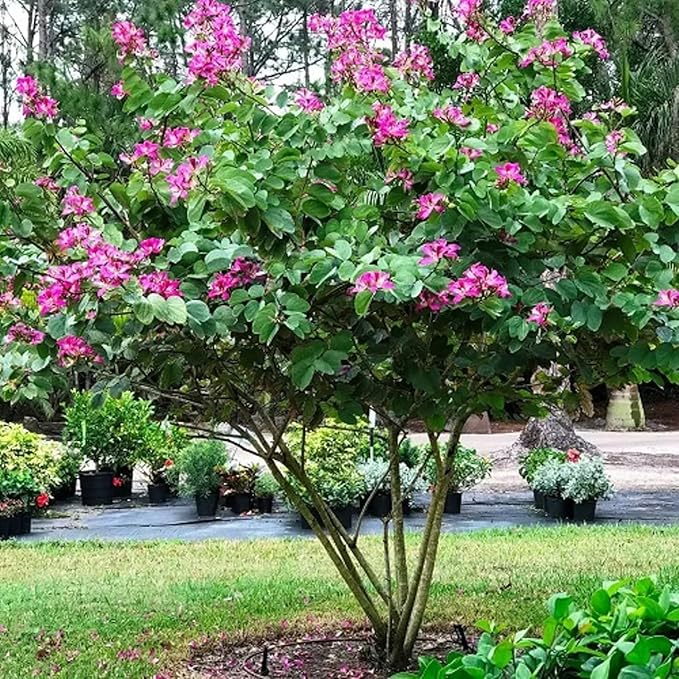
Kachnar (scientifically Bauhinia variegata), also known as the Orchid Tree, is one of the most beloved and dual-purpose trees in Pakistan. It is celebrated not only for its stunning, orchid-like purple and white blooms that herald the arrival of spring but also for its culinary importance, as the unopened flower buds are a seasonal delicacy in Pakistani households.

Description

  • The Flowers: The blossoms are large and fragrant, resembling orchids with five overlapping petals. They typically appear in shades of vivid purple, magenta, or pure white.

  • The Leaves: The most identifying feature of the Kachnar is its “butterfly-shaped” leaf. The leaves are twin-lobed and joined at the base, looking like a pair of wings or a camel’s footprint.

  • The Fruit: After flowering, the tree produces long, flat green pods that turn brown and “pop” to release seeds when mature.

  • Growth Habit: It is a medium-sized deciduous tree, reaching 20 to 35 feet in height. It has a rounded, spreading canopy that provides excellent shade.

Key Benefits

  • Culinary Delicacy: In the Punjab and KP regions, the unopened buds are harvested in late February and March to cook the famous “Kachnar Gosht” or “Kachnar Qeema.” They have a unique, slightly tart, and earthy flavor.

  • Medicinal Power: Kachnar has a long history in traditional medicine. The bark is often used as an astringent and is believed to help with digestive issues and skin conditions.

  • Spring Showstopper: Before the leaves fully emerge in early spring, the entire tree becomes a solid mass of flowers, making it one of the most beautiful ornamental trees for home gardens.

  • Pollinator Haven: The fragrant, nectar-rich flowers are a massive draw for bees, butterflies, and hummingbirds.

  • Nitrogen Fixer: Like many legumes, it helps improve soil quality by adding nitrogen, benefiting the plants growing around it.

Maintenance & Care

  • Sunlight: Needs full sun to produce a heavy flush of flowers. If it’s too shaded, you will get more leaves and fewer buds for cooking.

  • Watering: Young trees need regular watering to establish. However, once mature, Kachnar is quite drought-tolerant. In the current May heat, a deep watering twice a week is usually sufficient for an established tree.

  • Soil: Thrives in well-drained “Bhal” (canal silt). It is very adaptable and can handle the slightly alkaline soils common in the Lahore region.

  • Pruning: If you are growing it for harvesting buds, keep the tree at a manageable height by pruning the top branches. The best time to prune is right after the flowering season (April/May).

  • Deciduous Nature: Don’t be alarmed if the tree loses most of its leaves in mid-winter (December/January); this is a natural cycle before it prepares to bloom in the spring.
Category:

Kachnar (scientifically Bauhinia variegata), also known as the Orchid Tree, is one of the most beloved and dual-purpose trees in Pakistan. It is celebrated not only for its stunning, orchid-like purple and white blooms that herald the arrival of spring but also for its culinary importance, as the unopened flower buds are a seasonal delicacy in Pakistani households.

Description

  • The Flowers: The blossoms are large and fragrant, resembling orchids with five overlapping petals. They typically appear in shades of vivid purple, magenta, or pure white.

  • The Leaves: The most identifying feature of the Kachnar is its “butterfly-shaped” leaf. The leaves are twin-lobed and joined at the base, looking like a pair of wings or a camel’s footprint.

  • The Fruit: After flowering, the tree produces long, flat green pods that turn brown and “pop” to release seeds when mature.

  • Growth Habit: It is a medium-sized deciduous tree, reaching 20 to 35 feet in height. It has a rounded, spreading canopy that provides excellent shade.

Key Benefits

  • Culinary Delicacy: In the Punjab and KP regions, the unopened buds are harvested in late February and March to cook the famous “Kachnar Gosht” or “Kachnar Qeema.” They have a unique, slightly tart, and earthy flavor.

  • Medicinal Power: Kachnar has a long history in traditional medicine. The bark is often used as an astringent and is believed to help with digestive issues and skin conditions.

  • Spring Showstopper: Before the leaves fully emerge in early spring, the entire tree becomes a solid mass of flowers, making it one of the most beautiful ornamental trees for home gardens.

  • Pollinator Haven: The fragrant, nectar-rich flowers are a massive draw for bees, butterflies, and hummingbirds.

  • Nitrogen Fixer: Like many legumes, it helps improve soil quality by adding nitrogen, benefiting the plants growing around it.

Maintenance & Care

  • Sunlight: Needs full sun to produce a heavy flush of flowers. If it’s too shaded, you will get more leaves and fewer buds for cooking.

  • Watering: Young trees need regular watering to establish. However, once mature, Kachnar is quite drought-tolerant. In the current May heat, a deep watering twice a week is usually sufficient for an established tree.

  • Soil: Thrives in well-drained “Bhal” (canal silt). It is very adaptable and can handle the slightly alkaline soils common in the Lahore region.

  • Pruning: If you are growing it for harvesting buds, keep the tree at a manageable height by pruning the top branches. The best time to prune is right after the flowering season (April/May).

  • Deciduous Nature: Don’t be alarmed if the tree loses most of its leaves in mid-winter (December/January); this is a natural cycle before it prepares to bloom in the spring.
Reviews

There are no reviews yet.

Be the first to review “Kachnar”

Your email address will not be published. Required fields are marked *

Scroll to Top