Jacaranda Tree

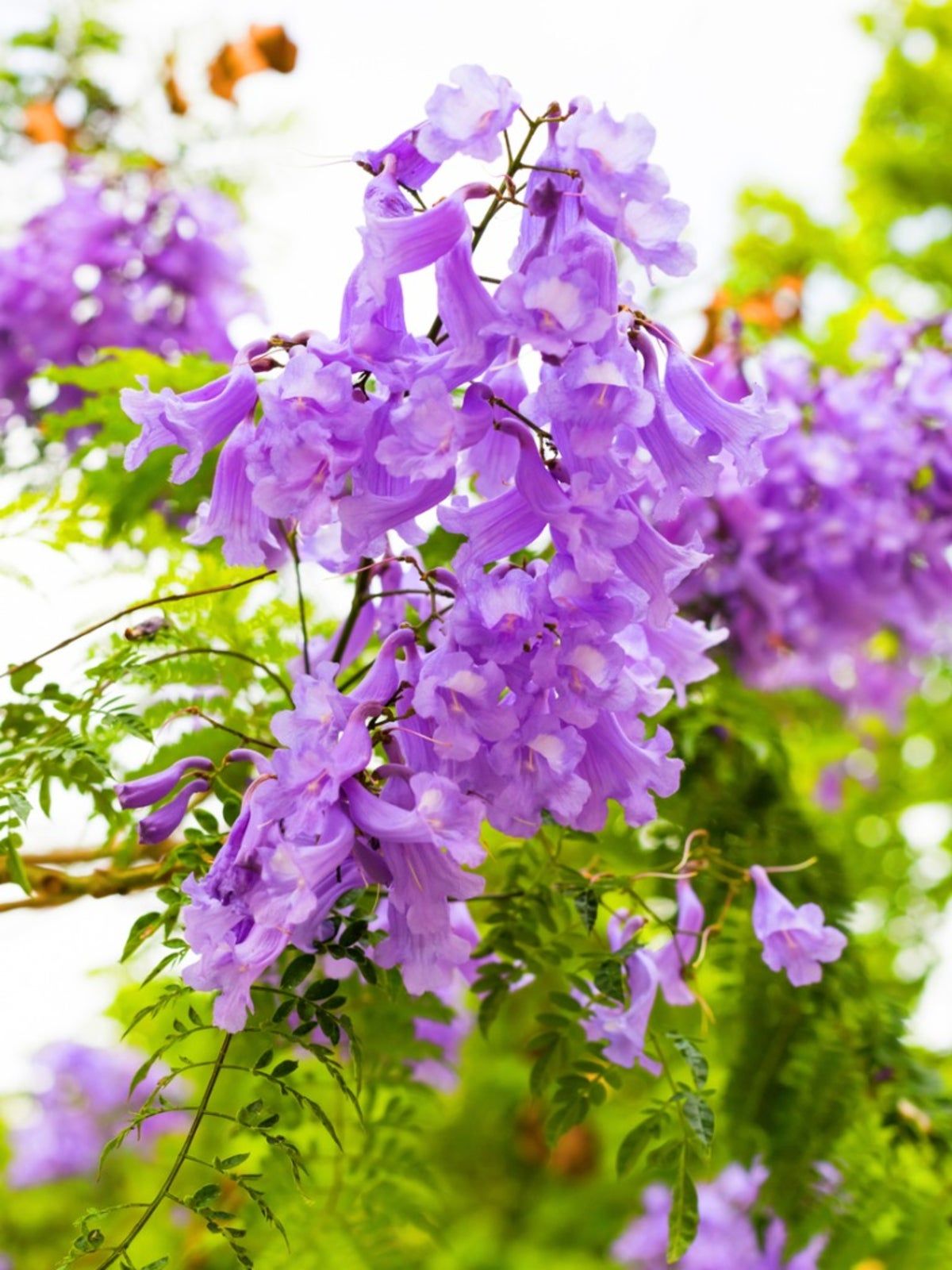
The Jacaranda (often called the Neela Gulmohar) is one of the most breathtaking ornamental trees in the world. It is famous for its ethereal, trumpet-shaped violet-blue flowers that cover the entire canopy in a cloud of color, usually during the spring months (March and April) in Pakistan.

Quick Facts

  • Scientific Name: Jacaranda mimosifolia

  • Plant Type: Deciduous Flowering Tree

  • Hardiness: Highly adaptable to the local climate; drought-tolerant once established.

  • Appearance: Features feathery, fern-like foliage and a spectacular display of purple-blue blooms that often appear before the leaves.

Key Benefits

  • Unrivaled Spring Beauty: When in full bloom, the Jacaranda is a showstopper. It creates a “purple carpet” on the ground as flowers fall, adding a poetic and serene aesthetic to any driveway or lawn.

  • Feathery Shade: Even when not in bloom, its delicate, fern-like leaves provide “dappled shade”—enough to cool the ground below while still allowing enough light for grass or smaller shrubs to grow underneath.

  • Fast-Growing Canopy: It is a relatively fast grower, making it an excellent choice for homeowners who want to establish a mature-looking garden or a shaded seating area within a few years.

  • Urban Resilience: It is remarkably resistant to urban pollution and can handle the high temperatures of the local summer, making it a reliable choice for city streetscapes and large residential plots.

  • Pest Resistant: The Jacaranda is rarely bothered by serious pests or diseases in the local region, making it a low-maintenance “legacy tree” that can live for decades.

Care Tips for Best Results

  • Sunlight: Thrives in full sun. It needs plenty of direct light to produce the maximum amount of flowers.

  • Watering: Young trees need regular watering to establish deep roots. Once mature, they are quite drought-tolerant, though they appreciate deep watering during the peak of the dry summer (May–June).

  • Pruning: It naturally forms a beautiful, spreading umbrella shape. Only minimal pruning is needed to remove dead wood or to keep lower branches from obstructing walkways.

  • Soil: Prefers well-draining soil. It does not like to sit in waterlogged ground, especially during the monsoon season.

Landscape Styling Ideas

  • The “Avenue” Look: Planting Jacarandas in a row along a main driveway or boundary wall creates a stunning “tunnel” effect during the spring.

  • The Corner Specimen: Use a single Jacaranda as a focal point in a large lawn. Its purple blooms offer a magnificent contrast against the deep green of the grass and the blue of the sky.

  • Contrast Planting: Pair it with the Gulmohar (Delonix regia) tree. The fiery red of the Gulmohar and the cool purple of the Jacaranda bloom around the same season, creating a world-class color contrast.
Category:

The Jacaranda (often called the Neela Gulmohar) is one of the most breathtaking ornamental trees in the world. It is famous for its ethereal, trumpet-shaped violet-blue flowers that cover the entire canopy in a cloud of color, usually during the spring months (March and April) in Pakistan.

Quick Facts

  • Scientific Name: Jacaranda mimosifolia

  • Plant Type: Deciduous Flowering Tree

  • Hardiness: Highly adaptable to the local climate; drought-tolerant once established.

  • Appearance: Features feathery, fern-like foliage and a spectacular display of purple-blue blooms that often appear before the leaves.

Key Benefits

  • Unrivaled Spring Beauty: When in full bloom, the Jacaranda is a showstopper. It creates a “purple carpet” on the ground as flowers fall, adding a poetic and serene aesthetic to any driveway or lawn.

  • Feathery Shade: Even when not in bloom, its delicate, fern-like leaves provide “dappled shade”—enough to cool the ground below while still allowing enough light for grass or smaller shrubs to grow underneath.

  • Fast-Growing Canopy: It is a relatively fast grower, making it an excellent choice for homeowners who want to establish a mature-looking garden or a shaded seating area within a few years.

  • Urban Resilience: It is remarkably resistant to urban pollution and can handle the high temperatures of the local summer, making it a reliable choice for city streetscapes and large residential plots.

  • Pest Resistant: The Jacaranda is rarely bothered by serious pests or diseases in the local region, making it a low-maintenance “legacy tree” that can live for decades.

Care Tips for Best Results

  • Sunlight: Thrives in full sun. It needs plenty of direct light to produce the maximum amount of flowers.

  • Watering: Young trees need regular watering to establish deep roots. Once mature, they are quite drought-tolerant, though they appreciate deep watering during the peak of the dry summer (May–June).

  • Pruning: It naturally forms a beautiful, spreading umbrella shape. Only minimal pruning is needed to remove dead wood or to keep lower branches from obstructing walkways.

  • Soil: Prefers well-draining soil. It does not like to sit in waterlogged ground, especially during the monsoon season.

Landscape Styling Ideas

  • The “Avenue” Look: Planting Jacarandas in a row along a main driveway or boundary wall creates a stunning “tunnel” effect during the spring.

  • The Corner Specimen: Use a single Jacaranda as a focal point in a large lawn. Its purple blooms offer a magnificent contrast against the deep green of the grass and the blue of the sky.

  • Contrast Planting: Pair it with the Gulmohar (Delonix regia) tree. The fiery red of the Gulmohar and the cool purple of the Jacaranda bloom around the same season, creating a world-class color contrast.
Reviews

There are no reviews yet.

Be the first to review “Jacaranda Tree”

Your email address will not be published. Required fields are marked *

Scroll to Top