

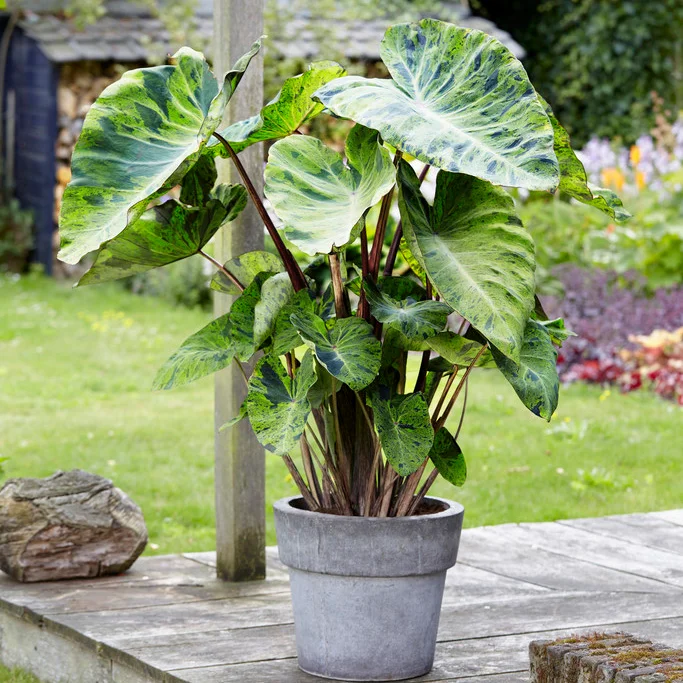
The Elephant Ear is a spectacular tropical plant famous for its massive, heart-shaped leaves that can grow several feet long. It is a favorite for creating an instant “jungle” look in Pakistani gardens, especially near water features or shaded patios where its grand scale can be fully appreciated.
Quick Facts
-
Scientific Name: Alocasia or Colocasia species
-
Plant Type: Herbaceous Perennial
-
Hardiness: Thrives in heat and high humidity; loves the monsoon season.
-
Appearance: Features enormous, velvety, or glossy leaves that resemble the ears of an elephant.
Key Benefits
-
Dramatic Focal Point: With its oversized foliage, it serves as a stunning centerpiece that adds immediate height and a lush, tropical atmosphere to any landscape.
-
Excellent for Wet Areas: Unlike many plants that suffer from “wet feet,” many Elephant Ear varieties (especially Colocasia) thrive in damp soil and near pond edges, making them perfect for areas with poor drainage.
-
Rapid Growth: During the warm growing season, these plants grow with incredible speed, producing new leaves every few weeks to quickly fill empty garden spaces.
-
Natural Cooling: Due to the large surface area of the leaves, they provide excellent natural shade for smaller plants and help cool the microclimate of your garden through transpiration.
-
Interior Statement: Smaller varieties or young plants make bold indoor statement pieces when placed in bright, humid corners of a home or office.
Care Tips for the Lahore Climate
-
Sunlight: In the intense heat of Lahore, filtered sunlight or partial shade is best. Direct 2:00 PM sun in June can “bleach” or scorch the large leaves.
-
Watering: These are “thirsty” plants. They require frequent watering to keep the soil consistently moist. If the plant “droops,” it is usually an immediate signal that it needs water.
-
Feeding: Because they grow so fast and produce such large leaves, they are “heavy feeders.” Use a nitrogen-rich liquid fertilizer or organic compost once a month during the summer.
-
Winter Care: They may go dormant or look a bit tired during the peak of winter (January). Simply cut back any yellowing leaves; the plant will “re-ignite” with fresh growth as soon as the weather warms up in February.

Reviews
There are no reviews yet.