

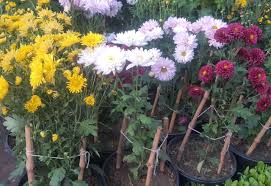
Gul-e-Daudi (scientifically known as Chrysanthemum) is arguably the most celebrated winter flower in Pakistan, especially in Lahore, where annual exhibitions are dedicated to its beauty. Known as the “Queen of the East,” it provides a massive explosion of color just as other plants begin to go dormant for the winter.
While typically associated with November and December, the plant remains a permanent resident in many gardens through the summer, waiting for the cooler nights to bloom again.
Description
-
The Flowers: They come in an incredible variety of shapes—from the massive, shaggy “Spider” and “Football” mums to the tiny, button-like “Pompons.” Colors range from pure white and sunny yellow to deep maroons, purples, and vibrant bronzes.
-
The Foliage: Distinctive, lobed, dark-green leaves that have a slightly peppery, herbal scent when crushed.
-
Growth Habit: It is a perennial sub-shrub. If left unpruned, it can become leggy, but with proper “pinching,” it forms a dense, rounded mound of color.
Key Benefits
-
Longest Bloom Duration: Once a Chrysanthemum opens, the flowers can remain fresh on the plant for 4 to 6 weeks, far outlasting almost any other winter annual.
-
Air Purifier: According to NASA studies, Chrysanthemums are among the best plants for removing toxins like ammonia and benzene from the air.
-
Perennial Nature: Unlike Petunias, which die after one season, Gul-e-Daudi is a permanent garden member. With a little care, the same plant will bloom for you year after year.
-
Variety of Forms: Whether you want a single giant exhibition bloom or a “carpet” of a thousand tiny flowers, there is a variety of Gul-e-Daudi to fit the need.
-
Symbolism: In local culture, it is the symbol of the peak winter season and is a favorite for traditional floral arrangements and bouquets.
Maintenance & Care (May/Summer Strategy)
-
The “Summer Survival” Rule: As of May, your Gul-e-Daudi is in its vegetative (growing) stage. In the 40°C+ heat of Lahore, move your pots to a shaded, cool area or under a green net. It cannot handle the blistering direct afternoon sun of June.
-
Watering: During the summer, keep the soil moist but not soggy. Avoid wetting the leaves in the evening, as this can lead to “Black Spot” fungus or mildew.
-
The “Pinching” Technique: Between now and August, you should “pinch off” the top inch of new growth every few weeks. This forces the plant to branch out, resulting in a much bushier plant with hundreds of flower buds in the winter.
-
Soil: They are “heavy feeders.” Use rich “Bhal” (canal silt) mixed with plenty of well-rotted Gobar ki khaad (cow manure).
-
Pest Control: Keep a sharp eye out for Black Aphids, which love to cluster on the new tips of Gul-e-Daudi. A simple spray of soapy water or Neem oil usually solves the problem.



Reviews
There are no reviews yet.