

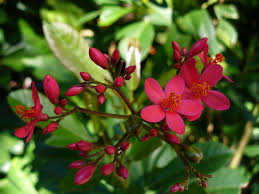
The Jatropha (specifically Jatropha integerrima, often called Peregrina or Spicy Jatropha) is a favorite in Pakistani landscaping for one simple reason: it is a “color factory.” It is one of the few shrubs that can provide bright red clusters of flowers almost 365 days a year, even in the intense heat of a Lahore summer.
Quick Facts
-
Scientific Name: Jatropha integerrima
-
Plant Type: Evergreen Shrub / Small Tree
-
Hardiness: Highly heat-tolerant; loves tropical and subtropical climates.
-
Appearance: Glossy, dark green leaves that can be oval or “fiddle-shaped,” topped with constant clusters of star-shaped, fiery red or deep pink flowers.
Key Benefits
-
Year-Round Blooming: While many flowering plants have a specific “season,” Jatropha is rarely without flowers. It provides a consistent “pop” of red that keeps a garden looking alive during the transition between seasons.
-
Butterflies & Sunbirds: It is arguably one of the best plants for attracting wildlife. Butterflies find the nectar-rich flowers irresistible, making it a “must-have” for a nature-friendly garden.
-
High Heat Resilience: It stands up incredibly well to the 45°C+ temperatures of May and June. The foliage stays green and the flowers don’t “burn” easily in the sun.
-
Versatile Training: It can be grown as a dense, rounded shrub for privacy, or you can prune the lower branches to create a beautiful, multi-stemmed small “ornamental tree” for a patio or terrace.
-
Drought Tolerant: Once established, it has very low water requirements, making it a sustainable choice for larger landscapes or for those who travel frequently.
Care Tips for the Local Climate
-
Sunlight: Thrives in full sun to partial shade. For the best flowering, give it as much direct sunlight as possible. If kept in too much shade, it will produce more leaves and fewer flowers.
-
Watering: It prefers well-drained soil. Water it regularly during the summer, but let the soil dry out slightly between cycles. It does not like “wet feet,” so avoid overwatering during the monsoon.
-
Soil: It is not picky about soil types and handles the local loamy soil very well.
-
Pruning: It can become a bit “leggy” if left alone for years. Don’t be afraid to prune it back in early spring (February). This encourages a bushier shape and a massive new flush of flowers.
Landscape Styling Ideas
-
The “Patio Tree”: Plant Jatropha in a large, stylish pot and prune it into a small tree shape. It makes an elegant, flowering focal point for a terrace or rooftop garden.
-
The Mixed Hedge: Pair it with Ficus Panda or Duranta. The dark green of the Ficus provides a perfect backdrop for the vivid red Jatropha blooms.
-
Corner Filler: Use it to fill bright, sunny corners of the garden where other more delicate flowering plants might struggle with the heat.



Reviews
There are no reviews yet.