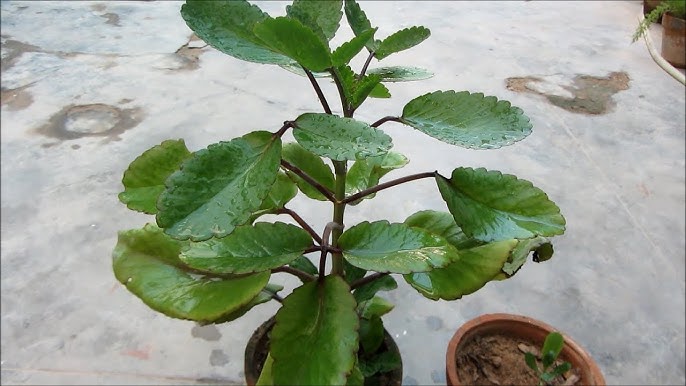
Pathar Chat

Pathar Chat (scientifically known as Kalanchoe pinnata or Bryophyllum pinnatum) is a fascinating succulent that holds a unique place in Pakistani households. Known as the Air Plant or Life Plant, it is famous for its “miraculous” ability to grow new plantlets along the edges of its leaves—even if the leaf is detached from the plant.

Quick Facts

  • Scientific Name: Kalanchoe pinnata

  • Common Names: Pathar Chat, Miracle Leaf, Panfuti.

  • Plant Type: Succulent Perennial.

  • Hardiness: Very hardy; survives extreme heat but needs protection from heavy frost.

  • Key Feature: Scalloped leaves that produce “baby” plants at every notch.

Key Benefits

  • Medicinal Reputation: The name “Pathar Chat” literally translates to “dissolving stones.” In traditional local medicine, it is widely believed that consuming the leaves (usually on an empty stomach) helps in breaking down or passing kidney and gallbladder stones.

  • Wound Healing: The leaves are often crushed and applied as a poultice to treat minor wounds, burns, or skin irritations due to their natural antibacterial and anti-inflammatory properties.

  • Fascinating Propagation: It is a brilliant plant for beginners or children. You can simply pin a single leaf to a bulletin board or place it on top of some soil, and you will see 10–15 new tiny plants sprout from the edges within days.

  • Drought Specialist: Like most succulents, it stores water in its fleshy leaves. It can survive for weeks without water, making it perfect for the dry, hot climate of Lahore.

  • Unique Aesthetic: It has a “rubbery,” exotic look with stems that can sometimes turn a dark reddish-purple, providing a nice contrast to the typical green shrubs in a garden.

Care Tips for the Lahore Climate

  • Sunlight: Thrives in bright, indirect light or morning sun. While it loves heat, the scorching afternoon sun in May/June can sometimes “bleach” the leaves or turn the edges brown. A spot with filtered light is ideal.

  • Watering: Treat it like a cactus. Only water when the soil is completely dry. In the winter, reduce watering to once every 2–3 weeks. Overwatering will cause the roots to turn mushy and rot.

  • Soil: Requires a very well-drained, sandy potting mix. If planting in a pot, ensure it has large drainage holes.

  • Winter Care: It is sensitive to extreme cold. If a “cold wave” hits Lahore in January, move your pots to a more sheltered area or indoors near a window.

Landscape & Interior Styling

  • The “Natural Pharmacy” Corner: Keep it in a decorative pot on your terrace or kitchen windowsill alongside other medicinal plants like Aloe Vera and Tulsi.

  • Rock Gardens: Its succulent nature makes it a perfect fit for a rockery. It looks great when surrounded by white pebbles or dark volcanic rock.

  • Living Favors: Because it multiplies so easily, it is a popular plant to share with neighbors and friends—a single leaf is all it takes to start a new garden.
Category:

Pathar Chat (scientifically known as Kalanchoe pinnata or Bryophyllum pinnatum) is a fascinating succulent that holds a unique place in Pakistani households. Known as the Air Plant or Life Plant, it is famous for its “miraculous” ability to grow new plantlets along the edges of its leaves—even if the leaf is detached from the plant.

Quick Facts

  • Scientific Name: Kalanchoe pinnata

  • Common Names: Pathar Chat, Miracle Leaf, Panfuti.

  • Plant Type: Succulent Perennial.

  • Hardiness: Very hardy; survives extreme heat but needs protection from heavy frost.

  • Key Feature: Scalloped leaves that produce “baby” plants at every notch.

Key Benefits

  • Medicinal Reputation: The name “Pathar Chat” literally translates to “dissolving stones.” In traditional local medicine, it is widely believed that consuming the leaves (usually on an empty stomach) helps in breaking down or passing kidney and gallbladder stones.

  • Wound Healing: The leaves are often crushed and applied as a poultice to treat minor wounds, burns, or skin irritations due to their natural antibacterial and anti-inflammatory properties.

  • Fascinating Propagation: It is a brilliant plant for beginners or children. You can simply pin a single leaf to a bulletin board or place it on top of some soil, and you will see 10–15 new tiny plants sprout from the edges within days.

  • Drought Specialist: Like most succulents, it stores water in its fleshy leaves. It can survive for weeks without water, making it perfect for the dry, hot climate of Lahore.

  • Unique Aesthetic: It has a “rubbery,” exotic look with stems that can sometimes turn a dark reddish-purple, providing a nice contrast to the typical green shrubs in a garden.

Care Tips for the Lahore Climate

  • Sunlight: Thrives in bright, indirect light or morning sun. While it loves heat, the scorching afternoon sun in May/June can sometimes “bleach” the leaves or turn the edges brown. A spot with filtered light is ideal.

  • Watering: Treat it like a cactus. Only water when the soil is completely dry. In the winter, reduce watering to once every 2–3 weeks. Overwatering will cause the roots to turn mushy and rot.

  • Soil: Requires a very well-drained, sandy potting mix. If planting in a pot, ensure it has large drainage holes.

  • Winter Care: It is sensitive to extreme cold. If a “cold wave” hits Lahore in January, move your pots to a more sheltered area or indoors near a window.

Landscape & Interior Styling

  • The “Natural Pharmacy” Corner: Keep it in a decorative pot on your terrace or kitchen windowsill alongside other medicinal plants like Aloe Vera and Tulsi.

  • Rock Gardens: Its succulent nature makes it a perfect fit for a rockery. It looks great when surrounded by white pebbles or dark volcanic rock.

  • Living Favors: Because it multiplies so easily, it is a popular plant to share with neighbors and friends—a single leaf is all it takes to start a new garden.
Reviews

There are no reviews yet.

Be the first to review “Pathar Chat”

Your email address will not be published. Required fields are marked *

Scroll to Top