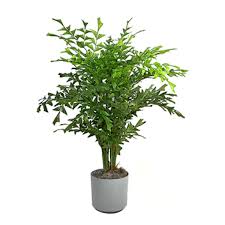
Fish Tail Palm

The Fish Tail Palm is one of the most unique and visually captivating members of the palm family. Named for its unusual leaflets that are jagged and torn at the ends—closely resembling the tail of a fish—this palm offers a soft, ruffled texture that contrasts beautifully with the stiff fronds of traditional palms.

Quick Facts

  • Scientific Name: Caryota mitis (Clumping variety) or Caryota urens (Solitary variety)

  • Plant Type: Evergreen Palm

  • Hardiness: Thrives in warm, humid environments; prefers sheltered spots.

  • Appearance: Features bi-pinnate leaves with triangular, “shredded” edges and a lush, dark green color.

Key Benefits

  • Exotic Texture: The “shredded” look of the leaves provides a soft, feathery aesthetic that is perfect for creating a tropical “jungle” vibe in a garden or courtyard.

  • Versatile Growth: The clumping variety (Caryota mitis) grows multiple stems, making it an excellent choice for a dense privacy screen or a “filled-out” corner plant.

  • Indoor & Outdoor Adaptability: It is highly popular as a large indoor floor plant for high-ceiling lobbies or bright living rooms, as it handles lower light levels better than many other palms.

  • Natural Cooling: Due to its dense, multi-layered canopy, it is excellent at providing shade and transpirating moisture, which helps cool the surrounding air in a patio or balcony setting.

  • Visual Height: It grows vertically rather than spreading wide, making it a “space-saver” for narrow garden beds along boundary walls.

Care Tips for the Lahore Climate

  • Sunlight: Prefers bright, indirect light or partial shade. In Lahore, the direct, harsh afternoon sun can sometimes “burn” the delicate leaf tips. It does best under the filtered shade of larger trees or on the east side of a building.

  • Watering: Likes consistent moisture. Do not let the soil dry out completely, but ensure the pot or garden bed has excellent drainage to prevent root rot.

  • Humidity: Being a tropical native, it loves humidity. Misting the leaves during the dry, hot months of May and June will keep the “fish tails” looking green and fresh.

  • Feeding: Use a slow-release palm fertilizer during the monsoon season to support its lush leaf production.
Category:

The Fish Tail Palm is one of the most unique and visually captivating members of the palm family. Named for its unusual leaflets that are jagged and torn at the ends—closely resembling the tail of a fish—this palm offers a soft, ruffled texture that contrasts beautifully with the stiff fronds of traditional palms.

Quick Facts

  • Scientific Name: Caryota mitis (Clumping variety) or Caryota urens (Solitary variety)

  • Plant Type: Evergreen Palm

  • Hardiness: Thrives in warm, humid environments; prefers sheltered spots.

  • Appearance: Features bi-pinnate leaves with triangular, “shredded” edges and a lush, dark green color.

Key Benefits

  • Exotic Texture: The “shredded” look of the leaves provides a soft, feathery aesthetic that is perfect for creating a tropical “jungle” vibe in a garden or courtyard.

  • Versatile Growth: The clumping variety (Caryota mitis) grows multiple stems, making it an excellent choice for a dense privacy screen or a “filled-out” corner plant.

  • Indoor & Outdoor Adaptability: It is highly popular as a large indoor floor plant for high-ceiling lobbies or bright living rooms, as it handles lower light levels better than many other palms.

  • Natural Cooling: Due to its dense, multi-layered canopy, it is excellent at providing shade and transpirating moisture, which helps cool the surrounding air in a patio or balcony setting.

  • Visual Height: It grows vertically rather than spreading wide, making it a “space-saver” for narrow garden beds along boundary walls.

Care Tips for the Lahore Climate

  • Sunlight: Prefers bright, indirect light or partial shade. In Lahore, the direct, harsh afternoon sun can sometimes “burn” the delicate leaf tips. It does best under the filtered shade of larger trees or on the east side of a building.

  • Watering: Likes consistent moisture. Do not let the soil dry out completely, but ensure the pot or garden bed has excellent drainage to prevent root rot.

  • Humidity: Being a tropical native, it loves humidity. Misting the leaves during the dry, hot months of May and June will keep the “fish tails” looking green and fresh.

  • Feeding: Use a slow-release palm fertilizer during the monsoon season to support its lush leaf production.

Reviews

There are no reviews yet.

Be the first to review “Fish Tail Palm”

Your email address will not be published. Required fields are marked *

Scroll to Top