

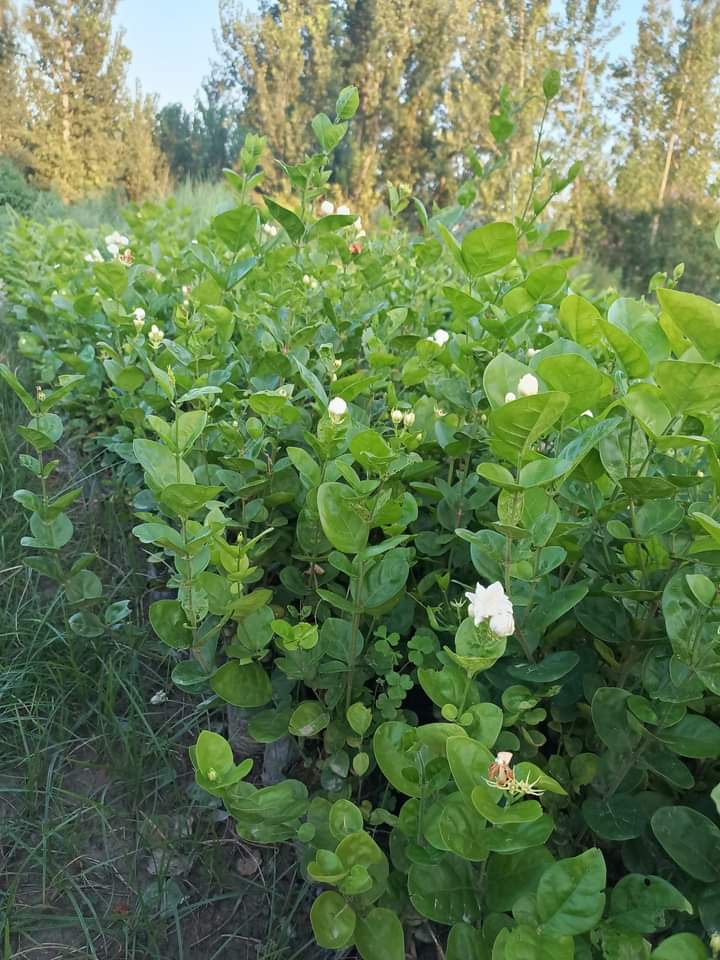
Motia (scientifically known as Jasminum sambac, or Arabian Jasmine) is arguably the most iconic flowering plant in Pakistan. It is more than just a garden shrub; it is a cultural symbol of purity and fragrance. In Lahore, its scent is the hallmark of summer evenings, often sold in markets as “Gajras” (flower bracelets) or used to scent homes.
Quick Facts
-
Scientific Name: Jasminum sambac
-
Local Name: Motia / Mogra
-
Plant Type: Evergreen Shrub / Scrambling Climber
-
Hardiness: Highly heat-tolerant; loves the humidity of the monsoon.
-
Key Feature: Intoxicatingly fragrant, waxy white flowers that usually open at night.
Key Benefits
-
Unrivaled Fragrance: The scent of Motia is legendary. A single mature bush can perfume an entire courtyard or terrace. It is the natural alternative to artificial air fresheners.
-
Continuous Summer Blooms: While many plants go dormant in the heat, Motia thrives. It blooms in “flushes” from late spring (March/April) all the way through the end of the monsoon (September/October).
-
Cultural & Commercial Value: The flowers are used for traditional garlands and essential oils. Growing your own provides a steady supply of fresh blossoms for decorative or spiritual use at home.
-
Versatile Growth: It can be maintained as a compact, rounded bush or allowed to scramble up a trellis or fence as a semi-climber.
-
Pollinator Magnet: The sweet scent attracts beneficial insects and nocturnal moths, contributing to a healthy garden ecosystem.
Care Tips for the Lahore Climate
-
Sunlight: Needs full sun to partial shade. For the most abundant flowering, it should get at least 5–6 hours of direct sunlight. In the extreme 45°C+ heat of June, it appreciates some afternoon shade to keep the leaves from yellowing.
-
Watering: Motia loves water but hates “wet feet.” During the summer, water it daily (preferably in the early morning). Ensure the soil is well-draining so water doesn’t sit around the roots, especially during the monsoon.
-
Feeding: It is a “hungry” plant. To get heavy blooms, feed it with organic compost or a high-potassium fertilizer every 15–20 days during the flowering season.
-
Pruning (Essential): Motia flowers on new growth. After each “flush” of flowers fades, lightly prune the tips of the branches. A major pruning should be done in late winter (February) to encourage a massive burst of new stems for the spring.
Landscape Styling Ideas
-
The “Sensory Entrance”: Plant Motia near your main gate or front door. The fragrance will greet you and your guests every time you arrive home in the evening.
-
Patio Containers: It grows exceptionally well in large terracotta pots. Place them near outdoor seating areas or under windows so the scent can drift indoors.
-
The Jasmine Hedge: Plant them in a row along a low boundary wall to create a “wall of fragrance” that stays green all year round.
Varieties to Look For
-
Single Petal (Motia): The most common variety with the strongest, classic fragrance.
-
Double Petal (Gul-e-Motia/Tuscan): Has multi-layered petals that look like tiny white roses.
-
Mograw (Bela): Large, heavy blooms with a slightly thicker petal texture.


Reviews
There are no reviews yet.