Pinwheel Flower

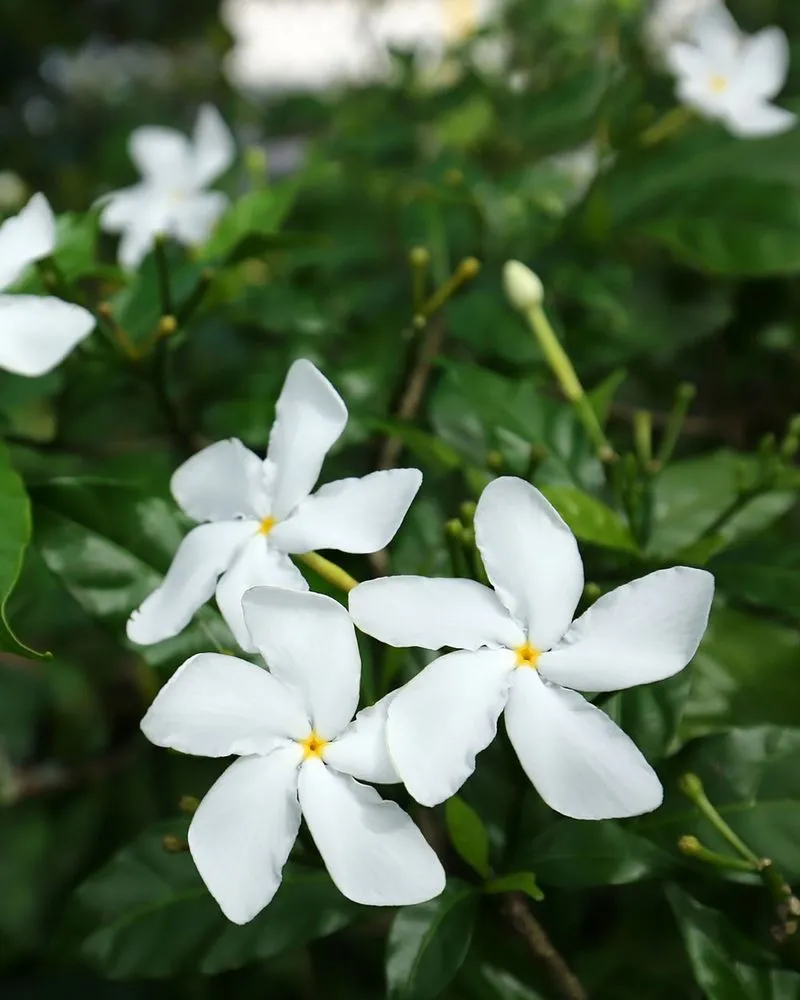
The Pinwheel Flower (scientifically known as Tabernaemontana divaricata, and locally often called Chandni) is an essential staple in Pakistani landscaping. It gets its name from the snowy-white, five-petaled flowers that look like tiny spinning fans or pinwheels. In the heat of Lahore, it is prized for its clean, lush green foliage and its ability to stay covered in white blooms all summer.

Quick Facts

  • Scientific Name: Tabernaemontana divaricata

  • Local Name: Chandni (often confused with Jasmine, though it is unscented).

  • Plant Type: Evergreen Flowering Shrub.

  • Hardiness: Extremely heat-tolerant; thrives in the high humidity of the monsoon.

  • Key Feature: Waxy, deep-green leaves and brilliant white flowers that “pop” against the dark foliage.

Key Benefits

  • Massive Bloom Power: From early spring through late autumn, the Chandni is rarely without flowers. It provides a constant “white-and-green” aesthetic that looks very clean and formal.

  • Low Maintenance: It is one of the toughest shrubs for our climate. It isn’t a “fussy” eater, doesn’t require constant spraying for pests, and can handle the dusty winds of the pre-monsoon season.

  • Versatile Varieties:

    • Single Chandni: The classic five-petaled pinwheel shape.

    • Double Chandni (Tagar): Features multi-layered petals that look like miniature white carnations or roses.

    • Dwarf Chandni: Stays very low to the ground (1–2 feet), making it the perfect choice for neat borders or small pots.

  • Dense Screening: It has very thick, bushy growth from the ground up. This makes it an ideal choice for a “living wall” to hide an ugly boundary fence or to create privacy from neighbors.

  • Moonlight Garden Beauty: Because the flowers are pure white, they “glow” in the dark. It is the perfect plant for a garden you enjoy at night, as it reflects the moonlight beautifully.

Care Tips for the Lahore Climate

  • Sunlight: Thrives in full sun to partial shade. It produces the most flowers in full sun, but the leaves stay a darker, richer green if it gets a little bit of afternoon shade in May and June.

  • Watering: It loves regular watering. During the summer heat, water it daily. If the leaves start to “droop,” it’s a sign it needs a deep soak.

  • Soil: Prefers well-drained, fertile soil. It can sometimes suffer from “Iron Chlorosis” (yellowing leaves with green veins) in our alkaline soil; adding a bit of organic compost or an iron supplement will fix this quickly.

  • Pruning: It handles pruning exceptionally well. You can shear it into a perfect square hedge, a round ball, or let it grow naturally. The best time for a major prune is in February.

Landscape Styling Ideas

  • The Formal Hedge: Use the Single Chandni to create a 3–4 foot tall hedge along a driveway. It creates a very professional, “Government House” style look.

  • The “Double” Accent: Use the Double Chandni (Tagar) in large terracotta pots near your seating area. The flowers are more substantial and look very elegant up close.

  • Layered Borders: Plant Dwarf Chandni in the front row and taller Lantana or Hibiscus behind it. The white flowers of the Chandni act as a “neutral” base that makes other colors stand out.
Category:

The Pinwheel Flower (scientifically known as Tabernaemontana divaricata, and locally often called Chandni) is an essential staple in Pakistani landscaping. It gets its name from the snowy-white, five-petaled flowers that look like tiny spinning fans or pinwheels. In the heat of Lahore, it is prized for its clean, lush green foliage and its ability to stay covered in white blooms all summer.

Quick Facts

  • Scientific Name: Tabernaemontana divaricata

  • Local Name: Chandni (often confused with Jasmine, though it is unscented).

  • Plant Type: Evergreen Flowering Shrub.

  • Hardiness: Extremely heat-tolerant; thrives in the high humidity of the monsoon.

  • Key Feature: Waxy, deep-green leaves and brilliant white flowers that “pop” against the dark foliage.

Key Benefits

  • Massive Bloom Power: From early spring through late autumn, the Chandni is rarely without flowers. It provides a constant “white-and-green” aesthetic that looks very clean and formal.

  • Low Maintenance: It is one of the toughest shrubs for our climate. It isn’t a “fussy” eater, doesn’t require constant spraying for pests, and can handle the dusty winds of the pre-monsoon season.

  • Versatile Varieties:

    • Single Chandni: The classic five-petaled pinwheel shape.

    • Double Chandni (Tagar): Features multi-layered petals that look like miniature white carnations or roses.

    • Dwarf Chandni: Stays very low to the ground (1–2 feet), making it the perfect choice for neat borders or small pots.

  • Dense Screening: It has very thick, bushy growth from the ground up. This makes it an ideal choice for a “living wall” to hide an ugly boundary fence or to create privacy from neighbors.

  • Moonlight Garden Beauty: Because the flowers are pure white, they “glow” in the dark. It is the perfect plant for a garden you enjoy at night, as it reflects the moonlight beautifully.

Care Tips for the Lahore Climate

  • Sunlight: Thrives in full sun to partial shade. It produces the most flowers in full sun, but the leaves stay a darker, richer green if it gets a little bit of afternoon shade in May and June.

  • Watering: It loves regular watering. During the summer heat, water it daily. If the leaves start to “droop,” it’s a sign it needs a deep soak.

  • Soil: Prefers well-drained, fertile soil. It can sometimes suffer from “Iron Chlorosis” (yellowing leaves with green veins) in our alkaline soil; adding a bit of organic compost or an iron supplement will fix this quickly.

  • Pruning: It handles pruning exceptionally well. You can shear it into a perfect square hedge, a round ball, or let it grow naturally. The best time for a major prune is in February.

Landscape Styling Ideas

  • The Formal Hedge: Use the Single Chandni to create a 3–4 foot tall hedge along a driveway. It creates a very professional, “Government House” style look.

  • The “Double” Accent: Use the Double Chandni (Tagar) in large terracotta pots near your seating area. The flowers are more substantial and look very elegant up close.

  • Layered Borders: Plant Dwarf Chandni in the front row and taller Lantana or Hibiscus behind it. The white flowers of the Chandni act as a “neutral” base that makes other colors stand out.
Reviews

There are no reviews yet.

Be the first to review “Pinwheel Flower”

Your email address will not be published. Required fields are marked *

Scroll to Top